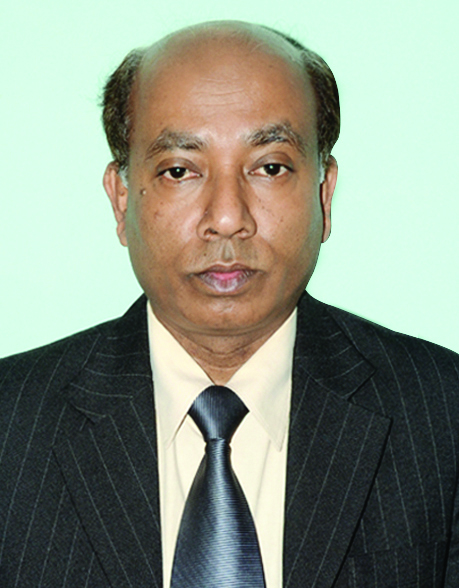
Prof. Dr. Md. Jahangir Alam
Interview by Fazlul Kabir
Chittagong University of Engineering & Technology (CUET) envisions to usher in a new era of engineering and technology education in Bangladesh and keeping this in aim, the university is constantly working to develop quality human resources in the field of engineering and technology for Bangladesh to face the competition of global market economy as well as to meet the present and future demand of the country, said Professor Dr. Jahangir Alam, Vice-Chancellor, CUET in an exclusive interview with The Guardian.
In this context, the Vice-Chancellor informed that the CUET has worked a vision plan to establish it as a center of excellence and under this plan a number of new departments, institutes and centers will be opened for advanced education, research and training on regional and national problems and to meet the challenges of sustainable development of Bangladesh.
Keeping this in aim, he mentioned, several MOUs have already been signed for higher education and research with a number of foreign universities. As a matter of fact, the Vice-Chancellor informed that a two-year M.Sc. in Disaster & Environment Engineering has been launched in CUET in collaboration with the Kassel University of Germany, which is the first of its kind in Bangladesh. Under this course, he mentioned, specialized education have been providing on earthquake, cyclone, flood, tsunami and landslide and on various aspects of environmental engineering.
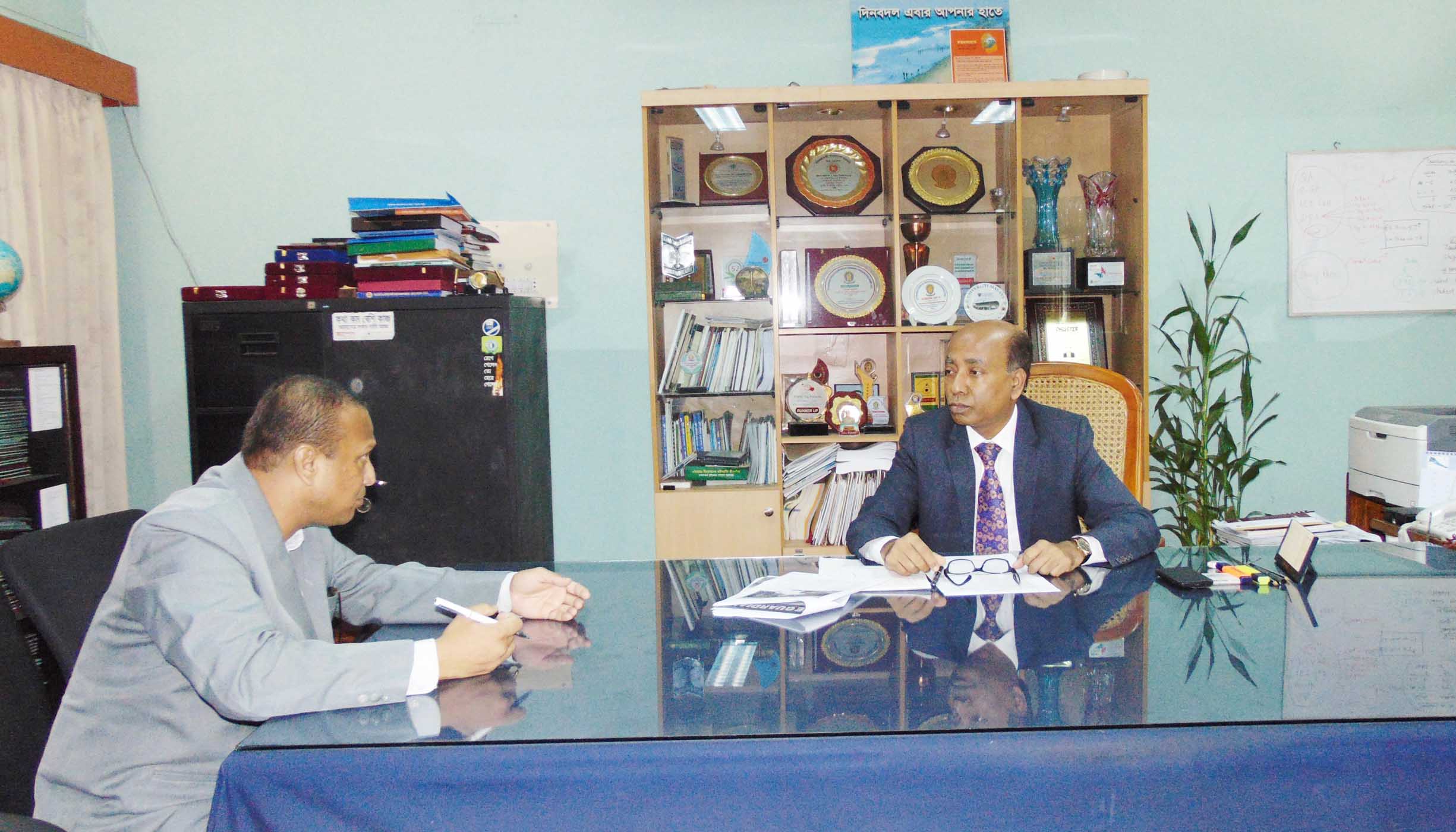
The Vice-Chancellor is giving interview to The Guardian Staff Reporter Fazlul Kabir.
While asked to comment about the budgetary allocation of the government for development activities of CUET, the Vice-Chancellor said the allocation of budget should be sufficient for establishing academic infrastructure, collecting quality equipment, education and research materials. In this context, he said as a newly established university CUET needs to expand its overall facilities to attain the expected goals and also to implement its vision plan, CUET requires to have necessary fund from the government.
Dr. Jahangir Alam, an educationist of international repute, believes there is no alternative to scientific, technological and engineering education for the overall development of the country. Side by side this, he suggested, to give special stress on the need of other disciplines for the development of human resources as well as to ensure the food security of Bangladesh. The learned Vice-Chancellor also expressed his belief that access to higher education is a special right of all and accordingly opportunity should be made available for all to receive higher education.
In an exclusive interview Dr. Jahangir Alam, a highly experienced Vice-Chancellor, replied to several questions covering the ongoing activities, contributions, limitations and future plans of CUET, including the present state of higher education in Bangladesh. His deliberations are very lively, informative, educative and interesting as well. The valuable excerpts of his interview are produced here below for The Guardian readers at home and abroad:
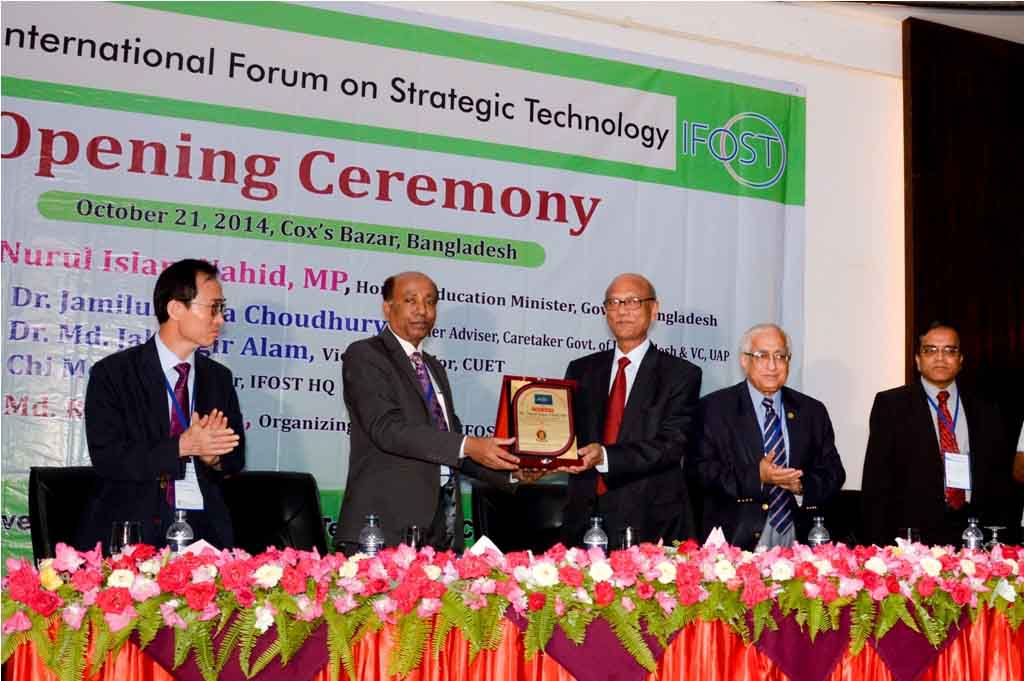
The Vice-Chancellor is presenting a crest to Education Minister Nurul Islam Nahid, MP on the occasion of his attending to 9th International Forum on Strategic Technology (IFOST) 2014.
The Guardian: Would you please give us a short introduction about the founding history of the Chittagong University of Engineering & Technology (CUET) through which it has come from an engineering college to its present position? In this context, would you mention some salient features of CUET which makes it different from the others?
Vice-Chancellor: In 1968 Chittagong Engineering College was established with 120 students with a view to promoting engineering education in this region. Surmounting all hindrances, engineering colleges of the country were converted to autonomous Bangladesh Institute of Technology in July 1986 through a presidential ordinance. In line with the continuation of this process, BIT, Chittagong started its journey as an autonomous university assuming the name Chittagong University of Engineering and Technology (CUET) in September, 2003 in order to establish itself as a regional centre of excellence in technology, education and research. CUET is well-equipped with efficient teachers and modern tools. It is known to all as an ideal campus for its idyllic natural beauty, which is free of air and sound pollution, together with an atmosphere highly conducive to education. The instance of the university being closed due to political or social occurrences is scarce. Guardians are very eager to send their children for study to this campus because the teacher-student relationship is like that of a parent-child. Above all, this university is fully free from various social unrests.
The Guardian: Keeping in mind the very spirit of the foundation of a university in providing engineering and technological education in this region of Bangladesh, would you assess how far this university has been successful in keeping due contribution to providing all branches of engineering and technological education in true sense?
Vice-Chancellor: CUET is one of the pioneer institutions that are engaged in dispersing engineering education and building up efficient engineers for the country. The mission and vision of this university is to create quality engineers, architects and planners as a means of developing efficient human resources. The geographical location of this university is such that the country’s largest sea port, the sole hydro-electric powerstation, oil refinery, EPZ , jute mills along with heavy, medium and small industries-all are adjacent to it. The commercial capital Chittagong city is also very near to the university campus. Graduates of this university are employed in these organizations. Their restless labor and dedicated efforts are significantly contributing to the overall development of the country.
The Guardian: In this context, keeping its long history in mind, would you give us an account about the number of graduates, post graduates and doctorates the CUET has produced in different fields and also comment about the contributions of the CUET graduates in the development of the engineering and technological sector of Bangladesh?
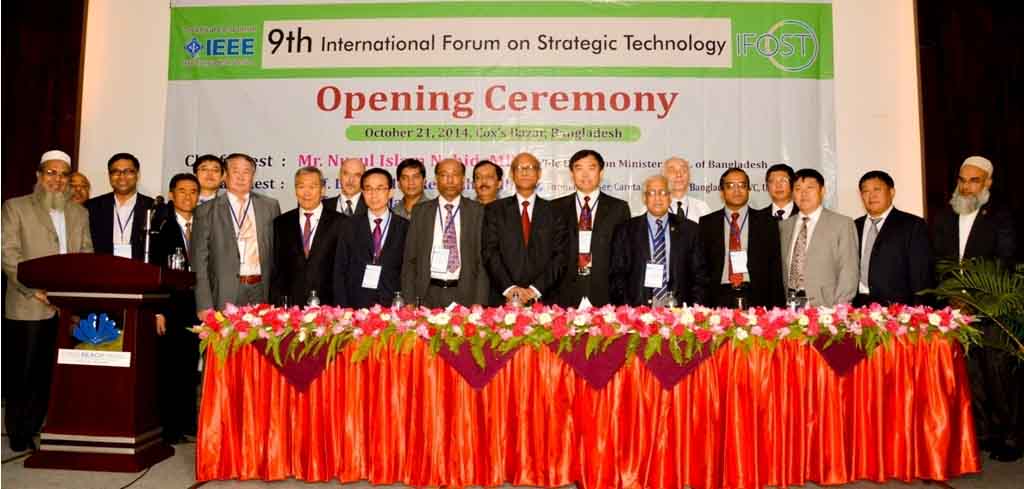
The Vice-Chancellor is seen with respected guests at 9th International Forum on Strategic Technology (IFOST) 2014.
Vice-Chancellor: About 9500 students have graduated from CUET so far, Swho are serving in numerous national and international organizations with efficacy and repute. CUET graduates are working in almost all institutions in the country that relate to engineering and technology. At present CUET graduates are holding the highest positions in several organizations. This will definitely help promoting the prospects of CUET. Though it is situated in a remote area and quite cut off from town, the present profile of CUET is seen by all as indicative of great future hopes.
The Guardian: Would you also give us an account about the number of present faculties, departments, centres, institutes, libraries and halls of the university and also say how far each of them is equipped to provide and ensure quality and standard engineering and technological education to fulfil the challenging needs of the present-age? In this context, would you also mention the latest scenario of overall institutional capacity including the physical infrastructures of the CUET in a nutshell and say what further steps should be taken to enhance the institutional capacity of the University?
Vice-Chancellor: CUET awards degrees in Master and Ph.D. courses besides B.Sc engineering degrees. namely Department of Civil Engineering (CE), Department of Civil and Water Resources Engineering (CWRE), Mechanical Engineering (ME), Petroleum & Mining Engineering (PME), Department of Mechatronics and Industrial Engineering (MIE) ,Electrical & Electronic Engineering (EEE), Computer Science & Engineering (CSE), Electronics and Tele-Communication Engineering (ETE), Architecture (Arch) and Urban & Regional Planning (URP). It also offers postgraduate degree in Civil Engineering (CE), Disaster & Environmental Engineering (DEE), Mechanical Engineering (ME), Electrical & Electronic Engineering (EEE), Computer Science & Engineering (CSE), Institute of Energy Technology (IET), Institute of Earthquake Engineering Research (IEER), Mathematics, Physics and Chemistry. There are five faculties in CUET. The Faculty of Civil Engineering consists of the departments of CE, DEE and CWRE ; the Faculty of Mechanical Engineering includes the departments of ME, PME and MIE; the Faculty of Electrical & Computer Engineering comprises the departments of EEE, CSE and ETE; the Faculty for Architecture & Planning consists of the department of Arch, URP and Humanities; the Faculty of Engineering & Technology combines the departments of Physics, Chemistry and Mathematics. It may be mentioned here that the department of Humanities includes faculty members from a range of disciplines such as Accounting, Management, Literature, Economics, Sociology, etc.

The Vice-Chancellor is seen in the discussion meeting of survey for extention of railway line to CUET campus.
For further research & development there also established Center for Environmental Science & Engineering (CESE) and Centre for River, Harbor & Landslide research (CRHLSR) Center for industrial problems research (CIPR) at CUET. CUET’s commitment to have a strong tie between the knowledge-earned at the university level, and that practiced at the industry, plays catalytic role to establish a separate institution that is the ‘Bureau of Research, Testing and Consultation (BRTC)’. Through its various activities BRTC, CUET is providing pragmatic and optimized solutions to the problems faced at the industry level.
Among many other academic activities. we already developed a CISCO Local Academy to render higher theoretical and practical knowledge on computer networking. We have a rich library with the strength of books, journals, audio visual instruments and online journals.
University Grants Commission (UGC) of Bangladesh, on behalf of the Ministry of Education (MoE), is currently implementing the Bangladesh Research and Education Network (BdREN) under HEQEP with assistance from World Bank. CUET also included this high-speed data-communications network. BdREN with its multi-gigabit capability aims to connect all universities, research institutions, libraries, laboratories,healthcare and agricultural institutions across the country and to support geographically dispersed academics, scientists and researchers with reliable access to high-end computing, simulation tools and datasets.
There are Five residential halls are to accommodate students- four for male students and one for female students. We have a spacious auditorium and a large playground to add to the charm of the campus.

The Vice-Chancellor is exchanging views with Alliance Francaise delegate, for Possible collaboration with French Universitis.
The Guardian: Would you mention the total number of teachers working at present at the university and say what facilities are available at the university to keep the teachers well-informed about the latest knowledge of the subjects which they are teaching?
Vice-Chancellor: At present, the number of teachers at CUET about 210. We encourage teachers to go for higher education. The teacher’s of this university are striving hard to ensure efficient engineering education . CUET has many Ph.D. and Master degree holding teachers. Another thing is that the authority of this university encourages the teachers in publishing research papers, attending conference/ and seminar at home and abroad.
The Guardian: Would you also inform us about the number of personnel involved in serving at various levels at the university and mention what facilities are also available at the university to bring efficiency in their services to keep them always fit to play the supportive role with the teachers and students in facing any challenges and needs of the CUET?
Vice-Chancellor: At present, there are about 350 officers and staff in CUET. All have been recruited on the basis of merit and qualification. I believe that all of them are putting their best efforts within their limitations. The relationship between teachers, students, officers and staff is like that in a family.
The Guardian: Would you comment on the present scenario of CUET and also say what further steps the University Authorities should take to keep pace with the new advancement of engineering and technological education and research along with the other relevant factors of modern age in the fields of research and development?
Vice-Chancellor: A vision plan has been worked out with a view to establishing this university as a centre of excellence. Several departments, institutes and centers will be opened for research and training on regional and national problems. Over the last few years, several MOUs have already been signed for higher education and research with many foreign universities including University of Yamagata of Japan, Ulsan University of South Korea, Kassel University of Germany, Saga University of Japan, Aalborg University of Denmark, Stuttgart University of Germany, Harbin University of China, Hawaii University of USA, Indian Institute of Engineering Science and Technology, National Society for Earthquake Technology, Nepal . We are working on similar arrangements with some other universities. In addition, CUET joined with the International Forum of Strategic Technology (IFOST), a forum of 11 universities comprised of 8 nations and South East Asia Network for Disaster & Environmental Engineering (SEAN-DEE). Moreover, the university has sent faculty members for higher education at IHE-UNESCO, Wageningen University, The Netherlands and AIT, under The Netherlands Initiative for Capacity development in Higher Education (NICHE) Project.
Institute of Earthquake Engineering Research (IEER), CUET started joint collaboration and research programs with the Institute of Earthquake Engineering & Engineering Seismology (IZIIS) of University St. Cyril and Methodius, Skopje, Macedonia..
In addition to the above, the university undertakes research works sponsored by the organizations such as United Nations, World Bank, JICA, Commonwealth Foundation, University Grants Commission, local government organizations, etc. Moreover, research works at the graduate level of study are now among the primary objectives of the university. To this effect, all departments of the university are carrying out their own research programs and publishing research journals periodically.
A two-year M.Sc. in Disaster & Environment Engineering has been launched in CUET in collaboration with Kassel University of Germany, which is the first of its kind in Bangladesh. Under this course, specialized education will be provided on earthquake, hurricane, tsunami, landslide etc, along with various aspects of environmental engineering. Steps were taken to establish a Language Centre for the teaching of foreign language more efficiently. Already Japanese, German language course has been.
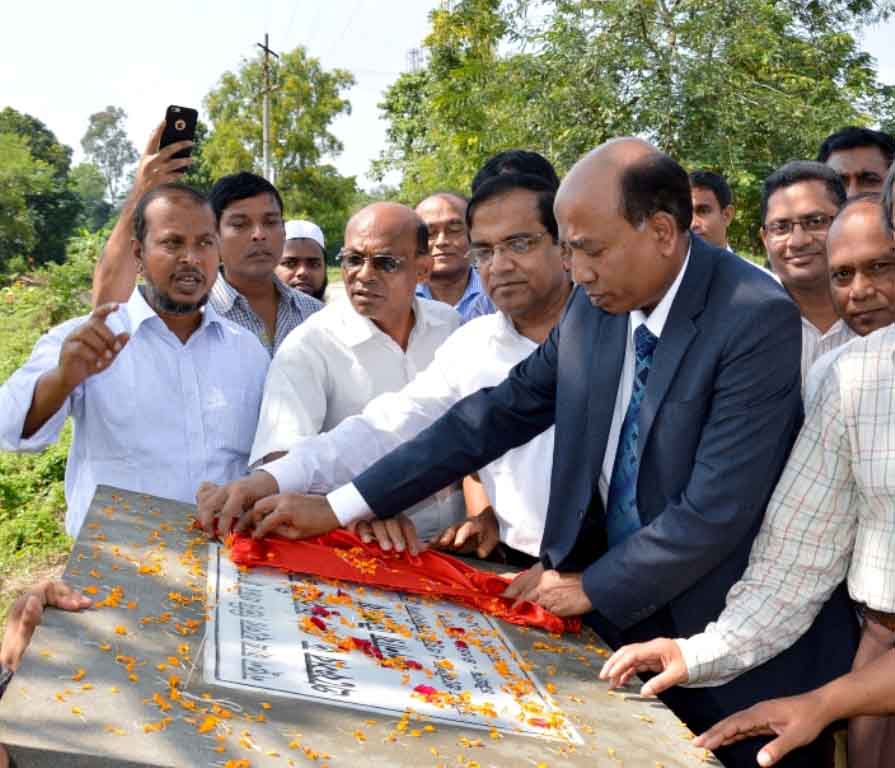
The Vice-Chancellor is inaugurating the site of New Boys’ Hall at CUET.
The Guardian: In this context, would you also justify how far the texts which are now being taught at the CUET are competent enough compared to the standard of other internationally reputed universities and say what further steps should be taken to improve the overall academic pursuit of the CUET to meet the future demand of engineering and technological education in Bangladesh?
Vice-Chancellor: At CUET we used the best possible equipments for practical teaching. We also update our curriculum and syllabuses regularly. Teachers are trying their best to ensure quality engineering education. One unique feature of this university is that it is free from session-jam. Classes and examinations are held regularly as per academic schedule. The university authority is constantly trying to develop quality human resources in the field of engineering and technology for us to survive in the competitive global open market economy.
The Guardian: In this aspect, would you also comment on the examination system prevailing at the CUET and say whether any further steps should be taken for the improvement of examination system in view of international standard?
Vice-Chancellor: It is our expectation that our examination system conforms to international standard. Without this, we will be lagging behind in the present competitive world. Now the whole world has become a global village, this is no more the cosmos. So, all things should be considered in the scale of contemporary global standard. This should be reflected in our syllabus and examination systems as well as in academic purposes.
The Guardian: It is alleged that using the university autonomy the public university teachers nowadays remain involved with party politics leaving the path of studies and research works and thus through political manoeuvres they try to make fortunes. As a result, they become neither good teachers nor good politicians. Rather they stay below the international standard, which is ultimately damaging the academic pursuits of both the public universities and their teachers. Would you give your reaction to this and inform us about the activities of the CUET teachers in this regard?
Vice-Chancellor: Teachers of this university are not generally involved in politics. It is not expected at all that their political involvement (if any) should hamper academic activities. They should concentrate most on building up a brilliant generation. That will be helpful for our nation and we can proceed towards prosperity towards that way. The qualities of a teacher include his sense of dignity about his profession, awareness of his duties and responsibilities, and on top of all, his utmost endeavor to build up able citizens for the country. Teachers can set themselves as models to be followed by others if they adhere to ethics and values.
The Guardian: It is also alleged that nowadays the involvement of the public university students with party politics is giving birth to new and newer violence day by day, which is not only damaging the image of the public universities as a whole but also seriously harming the academic atmosphere in the whole of the country. Would you give your reaction to this and also comment about the activities of the CUET students in this regard?
Vice-Chancellor: I think that student politics is needed for the betterment of the country. Students played a pivotal role in our language movement, in the mass uprising of 1969, in the liberation movement of 1971. But campus based students politics is not good. The same holds for CUET.
The Guardian: It is also alleged that because of political affiliation nowadays the public university administration is involved in partiality for its own group in respect of appointing chairman, provost, proctor, house tutors, promotion, housing allotment, appointing new teachers and employees, providing other special facilities. Due to all these undue practices by the administration, the non-political teachers as well as the non-political employees are getting seriously frustrated day by day. Would you give your reaction to this and say how far the present administration of the CUET is able to maintain its impartiality to build a new image and a new height of the CUET as one of leading engineering and technological universities of the country?
Vice-Chancellor: I am pleased to inform you that there is no political, social unrest in CUET family.
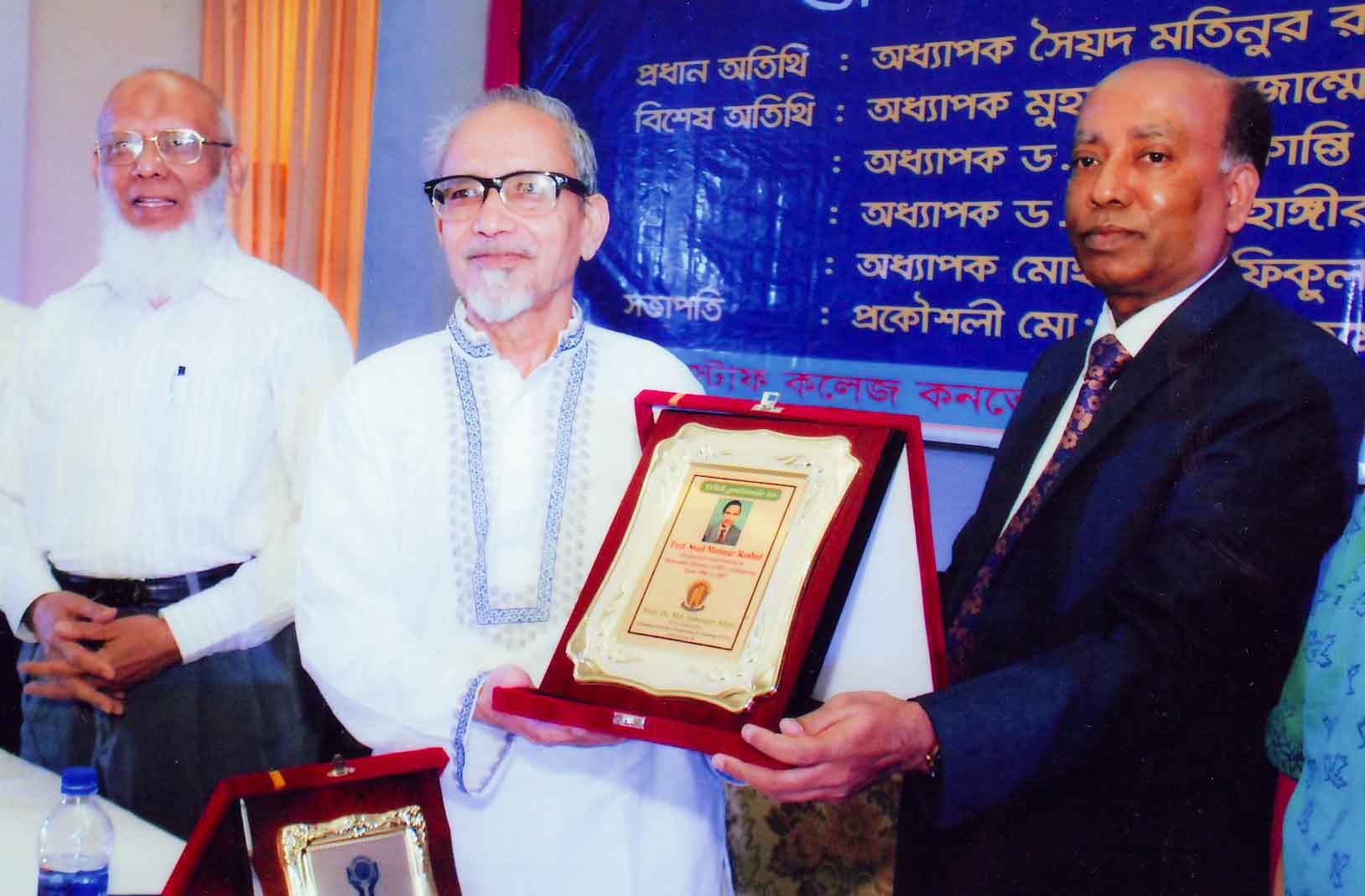
The Vice-Chancellor is presenting a momento to the Formar Director of BIT, Chittagong Prof. Syed Motinur Rashid at Annual General Meeting of CUET Ex-students’ Association held in Dhaka.
The Guardian: It is said that the teachers of public university have sufficient facilities and scope than the other professionals to serve the nation through research. Even they have no heavy pressure of taking class and other works like other professionals. And they are provided funds to buy books and materials for their individual use each year and special funds are also provided for individual research works and publications. Despite all these opportunities, most of them contribute nothing remarkable to the nation other than their simple routine jobs. Besides, many of them are involved in private teaching, brokerage and consultancy activities for the political parties or others where they get undue privileges. As a result, the scenario of higher education in Bangladesh has tremendously deteriorated nowadays. Would you give your reaction to this and suggest what urgent steps should be taken to improve the overall scenario of the public university education in Bangladesh and especially the education scenario of the engineering and technological universities across the country?
Vice-Chancellor: It involves the question of financial gain. Otherwise none would want to go in other directions quitting university profession. Teachers’ role in this matter should be selfless and resolute, because they are the persons who build up golden citizens. I believe that there is solace in teaching profession. There is ample scope in this profession of serving the country and the society by building up able citizens. These citizens can play in same walk places an important role in developing different sectors of the country.
The Guardian: It is also observed that some of the teachers nowadays in almost all the public universities are found to be involved in moral turpitude, say sex and monetary corruption and harassing the female students. The Public University Ordinance has defined severe punishment for all such evil practices, especially through ensuring the dismissal of services of such persons forever from the universities. But nothing of such action is yet to take against anyone nowadays by the administration of any public university. Would give your reaction to this and suggest necessary measures in this regard?
Vice-Chancellor: Sexual harassment in educational institutions is a much-talked-about issue nowadays. It must be prevented. The Ministry of Education and the UGC have already started working on it. All should be aware and active about this. There should be no compromise as far as the question of moral values is concerned. That teachers/officers/employers who are regarded as the builders of the nation, must be aware of this heinous act.
The Guardian: Apart from all these, would you discuss the various contributions of CUET to the development of Bangladesh including our great independence and other national achievements? In view of all of its past contributions to the nation, would you say what more role the CUET should play in the solution of many serious problems of the nation like water, electricity, traffic jam and the issues like?
Vice-Chancellor: A number of research works are being conducted in these fields in CUET. Their applicability is also worth mentioning.
The Guardian: Side by side the successes of the CUET, would you also discuss the institutional problems and limitations of the CUET and suggest their possible remedial measures? In this context, would you also give your reaction to the opinion expressed by the concerned people that the current budgetary allocation made for the CUET is not sufficient to meet the expected demands as well as to fulfil the standard of a leading engineering and technological university like CUET in a changing circumstance of the time and needs?
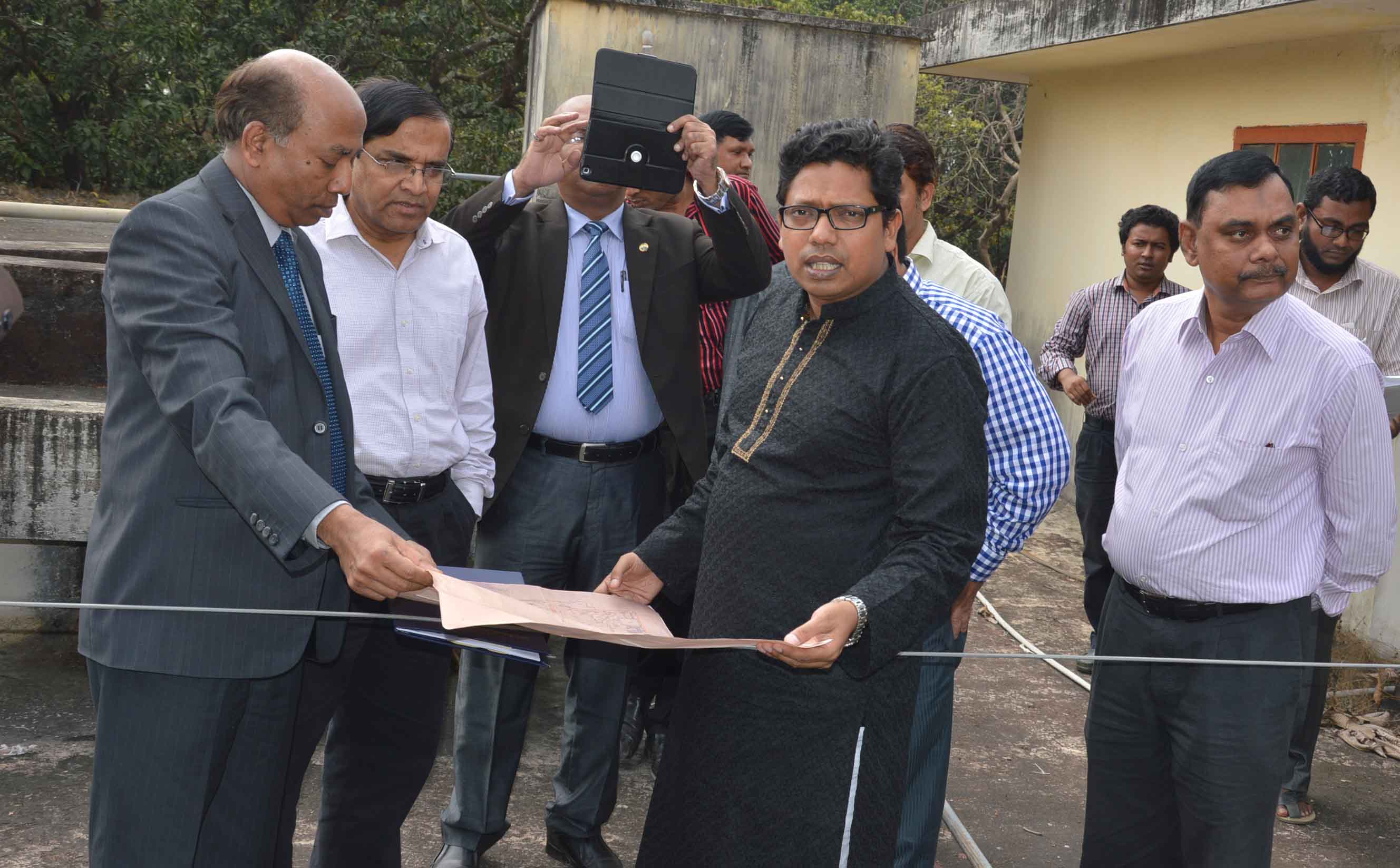
The Vice-Chancellor is seen with State Minister for Information & Communication Technology (ICT) Zunaid Ahmed Palak during his visit to the CUET.
Vice-Chancellor: Allocation of budget should be sufficient for establishing educational infrastructure, collecting quality equipment, and for higher education and research. The university can play its expected role in the context of the extended modern economic activities and new demands if the authority takes into cognizance the new projects that the university has proposed and its plans to set up new departments. There has been much acceleration in the infrastructural and environmental development activities following the former BIT’s up-gradation into university. In the present circumstances feasible measures should be adopted with a view to accelerating the release of allocation to realize the sanctioned projects of the university within a projected time frame. About four and a half thousand students are currently studying in CUET.
The Guardian: Along side the academic activities, would you also reflect what role the CUET is playing in attracting the students towards the extracurricular activities like sports and cultural activities and environment development programme as the present scenario of environmental pollution in Bangladesh has become a serious concern to the nation?
Vice-Chancellor: CUET holds annual sports competition, cultural events and various competitive programmes in order to help flourish the talent of students, thereby to build up a healthy nation. Students keep buzzing the idyllic and large campus of CUET by arranging various events all the year round. The administration renders the best helps possible in this regard.
The Guardian: Would you also reflect what specific measures are available under the Administration of the CUET to ensure the safety and security of the students, teachers as well as employees of the university on the campus against any untoward incidents since nowadays the safety and security have become more or less a serious concern for all everywhere in the country?
Vice-Chancellor: CUET is known to all as a safe and calm campus. All are dutiful and cooperative in maintaining the quiet and discipline in the campus. So possibility of untoward occurrences is always very low here. We try our best to avoid any unlawful incident.
The Guardian: It is learnt that if the teachers of the public universities work in any other organizations and earn money, the universities will get a particular sum of money from the sources of those incomes. Would you please give your reaction to this and inform us how many teachers of the CUET are now involved in working with different organizations at home and abroad and how much amount of money the CUET is getting from this source?
Vice-Chancellor: Our teachers are allowed to do community work. They are also allowed, as per approved rules, to teach in local universities. In the case of consultancy works, CUET gets 25-30% this earnings.
The Guardian: It is alleged by the concerned people that in close collaboration with the teachers of the public universities, the profit makers have established a good number of private universities and are going to establish many more across the country without any campus and education environment in true sense, where the students have to pay a very high cost to study at these universities although most of these universities have neither appropriate teaching standard nor required faculties. Whereas the ultimate aim of the initiators of these universities is to earn maximum profit through selling certificates in the name of education. Not only this, even some of these universities are attracting the students in the name of engineering and technological education. Would you suggest what steps should be taken to protect the image of the public universities as well as to improve the qualitative standard of higher education in the present perspective of Bangladesh and especially of the CUET in such a critical situation?
Vice-Chancellor: There should not be any compromise with quality and standard. This is all the more true of higher education. At present most public universities are playing their role in the field of higher education. But of course we cannot take lightly the issue of education business. I think private universities can also contribute to higher education, provided proper processes and management are ensured.
The Guardian: Would you inform us about the number of various committees of the CUET and say what interactions the Syndicate has to maintain with all these committees?
Vice-Chancellor: CUET has four principal committees. These are the Syndicate, the Finance Committee, the Academic Council and Planning & Development Committee. Three committees see over the core activities in the university. These committees are formed by the authority through prescribed processes. There are some other auxiliary committees which help maintaining the dynamism of the university. As the highest authority, the Syndicate plays the policy making role in different issues and it grants/sanctions different projects.
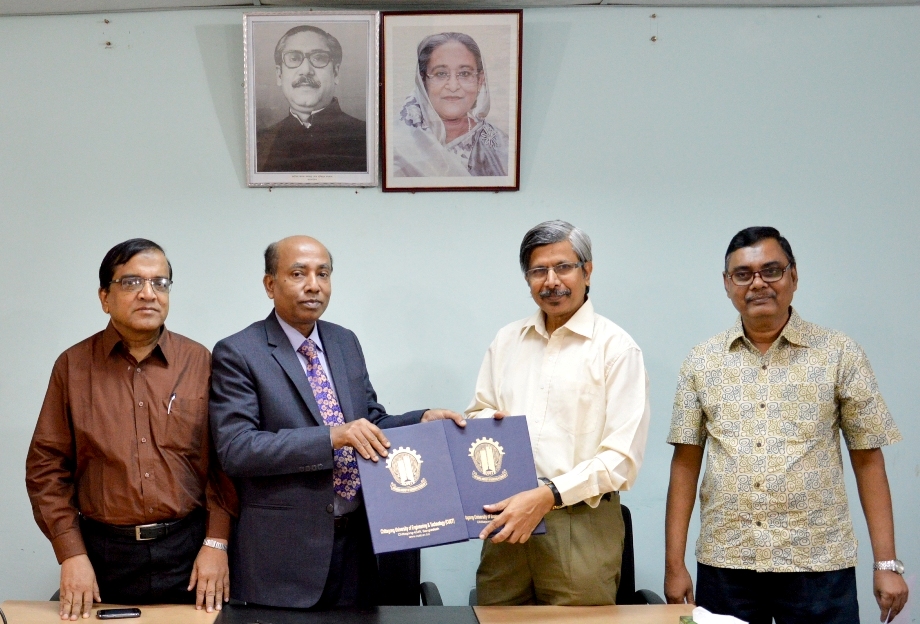
The Vice-Chancellor is seen exchanging the document of MoU with Indian Institute of Engineering, Science and Technology (IIEST).
The Guardian: It is learnt that all the public universities of liberal arts and science in Bangladesh have both senate and syndicate but the public universities of engineering and technology have only syndicate. Would you discuss the reasons behind and also mention the sufferings of engineering and technological universities in absence of senate system?
Vice-Chancellor: In absence of senate, although there seems to same aim, same problems, but this is not true aspect. How university administration will run, it is declared by the Govt. policy.
The Guardian: It is said that CUET has been privileged since the President of the People’s Republic of Bangladesh is the Chancellor of the CUET. Would you give your reaction to this?
Vice-Chancellor: The honorable president of the country is the Chancellor of all public universities. So CUET gets special privilege rather it is as good as other public universities of the countries.
The Guardian: And you know our Prime Minister Sheikh Hasina through her vision 2021 dreams of a digital Bangladesh and accordingly calls upon all to work together to turn her dream into a reality. In this context, would you say what special role the CUET should play to implement her dream into a reality?
Vice-Chancellor: CUET is working in line with the digital Bangladesh slogan of the Prime Minister. Already digitalization has been introduced in some areas including the admission procedures.
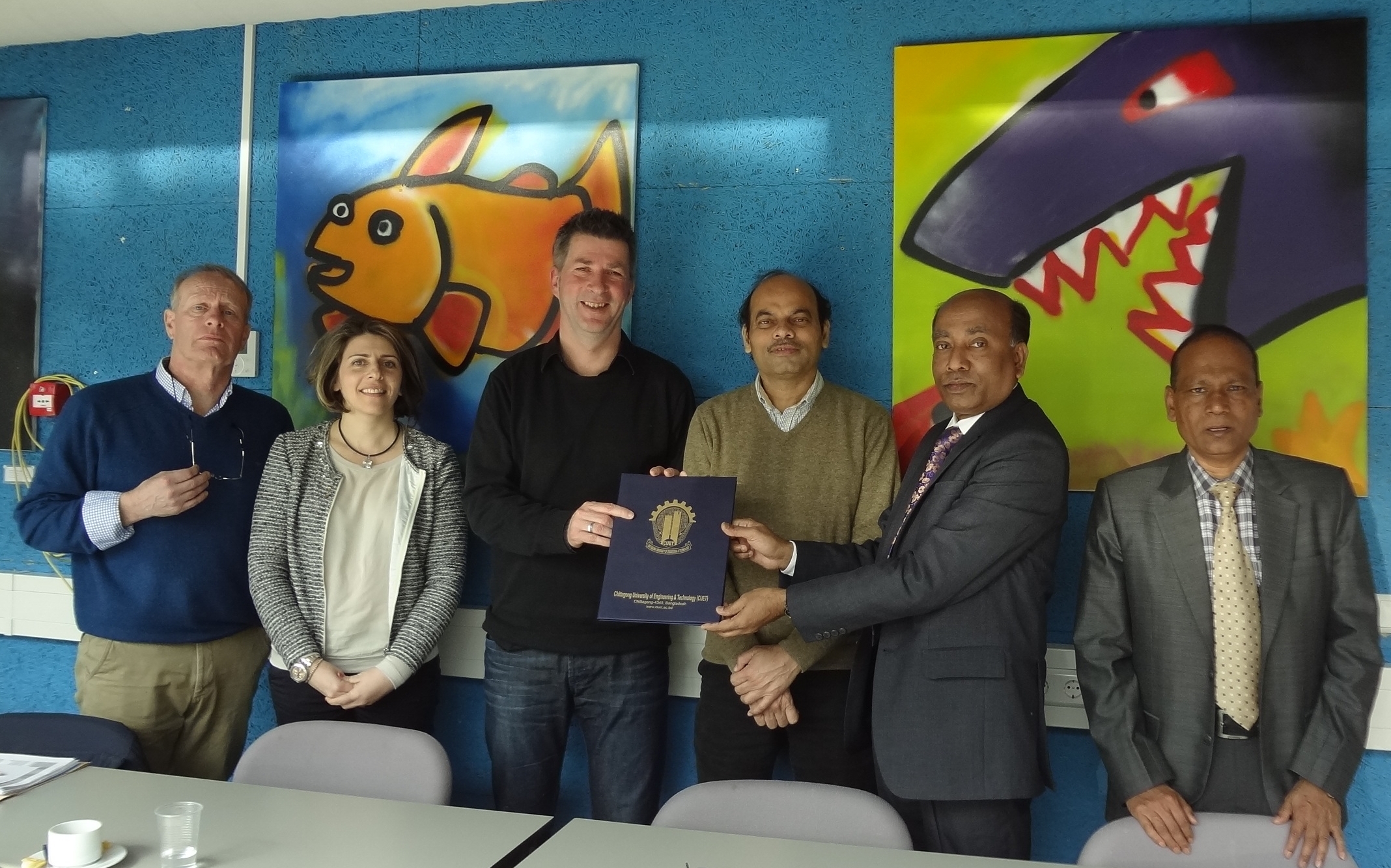
The Vice-Chancellor is seen exchanging the document of MoU with Wageningen University, The Netherlands.
The Guardian: In the present perspective of higher education in Bangladesh, would you comment on the role and activities of UGC and say what special and more role it should play in the proper growth and development of both the public and private universities as supplemet to each other?
Vice-Chancellor: In my opinion, UGC is playing a good role in co-ordinating the activities of all universities of higher education. I think UGC can hold a meeting in a matter with VC’s to discuss the problems and their solutions and also to do effective co-ordination of activities of universities.
The Guardian: So far it is learnt that every university has an alumni association and the association assists the university in different ways. Would you inform us about the CUET alumni association and say what kind of cooperation the association extends to the CUET?
Vice-Chancellor: The Alumni Association of CUET is very well-organized. Its activities are spread over home and abroad. Outside the country, the association has activities in the USA, UK, Canada, Australia, Korea, Dubai etc. Alumni Association provides scholarships to bright students of CUET, patronizes constructions of infrastructure, renders help in various other social and cultural activities. It helps at the needs of alumni. This year CUET Alumni helped the treatment of student Sohag. Recently they built a bus shed passage in front of CUET gate.j
The Guardian: Since the 21stcentury is a very advanced century and there is no alternative to knowledge and science, especially to engineering and technological education to face the challenges of this century, what is your message for the teachers and students in this regard, and what is your suggestion for the government to ensure the overall improvement of higher education, especially the education of engineering and technology so that Bangladesh can reach the expected goal soon?
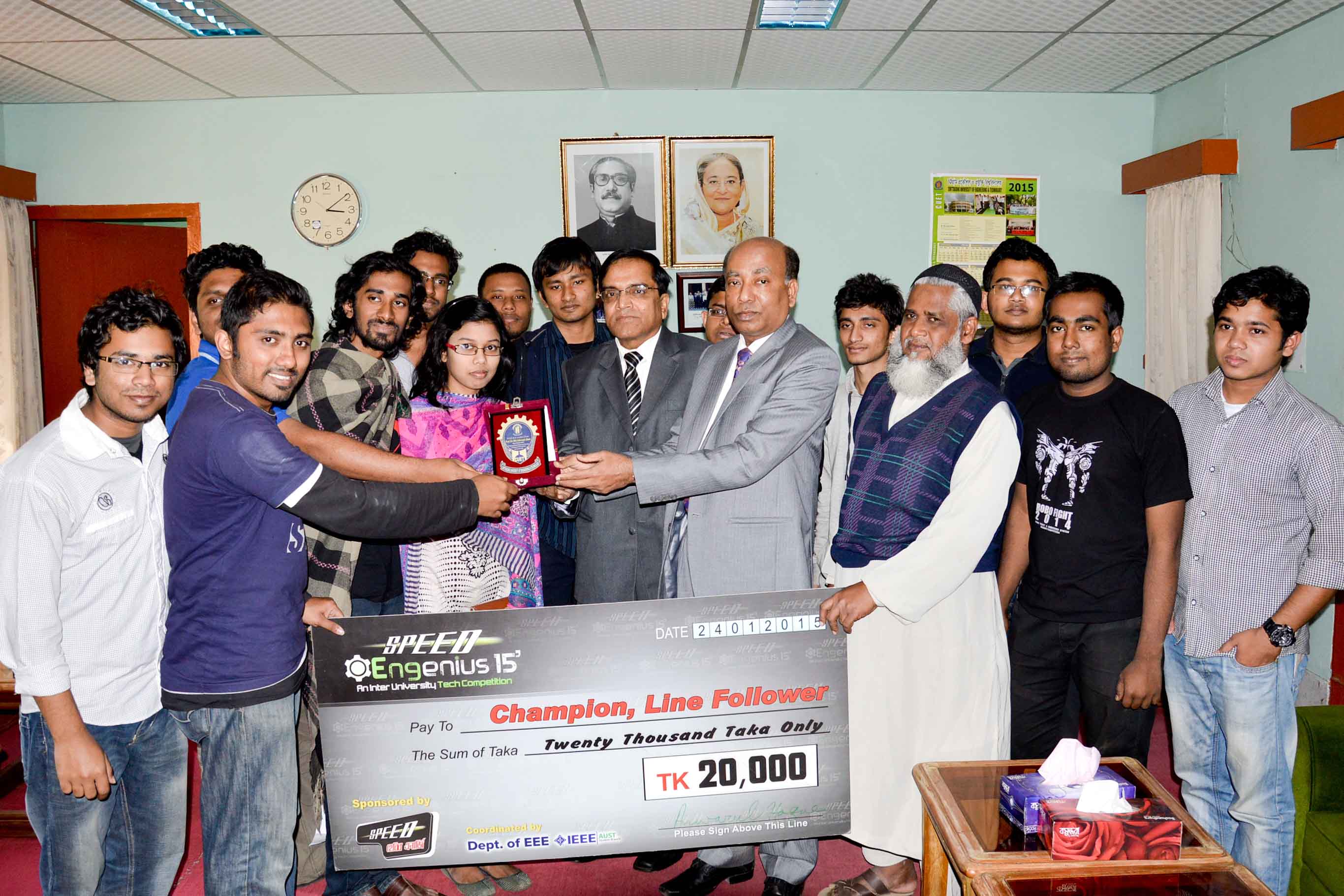
The Vice-Chancellor is congratulating RMA Evolution team of CUET who became champion in `Engenius.
Vice-Chancellor: I believe that there is no alternative to scientific, technological and engineering education for the overall development of the country. At the same time I maintain that other disciplines are also contributing much to human resources development and agricultural development. I think special importance should be given to scientific, technological and engineering education to uplift a developing nation. Access to higher education is a special right of all. So opportunities should be available to all to receive higher education. I find that teacher crisis is a great obstacle to quality education. Many of our talented teachers do not return from abroad due to various reasons, Even when they return, they switch on to other places abandoning public universities in search of a more rewarding livelihood. We must attract the best talents to teaching profession. For this they should be provided with special salaries/allowances and other relevant incentives. We must see that dignity, if the teacher is never maligned. Educational institutions should be kept outside the clutches of politics. All should respect the teachers. It must be ensured that teachers do not find themselves deprived. I believe that it will be good for all if teachers are given their deserved status and dignity. In this way the future citizens will be able to build up their career in teaching with greater interest. It’s true that talented people are rapidly losing motivation to take up this profession. This must be resolved. There should be more scope for culturing talent. We need initiative to introduce special pay scale for teachers, something very much in practice in our neighboring countries.
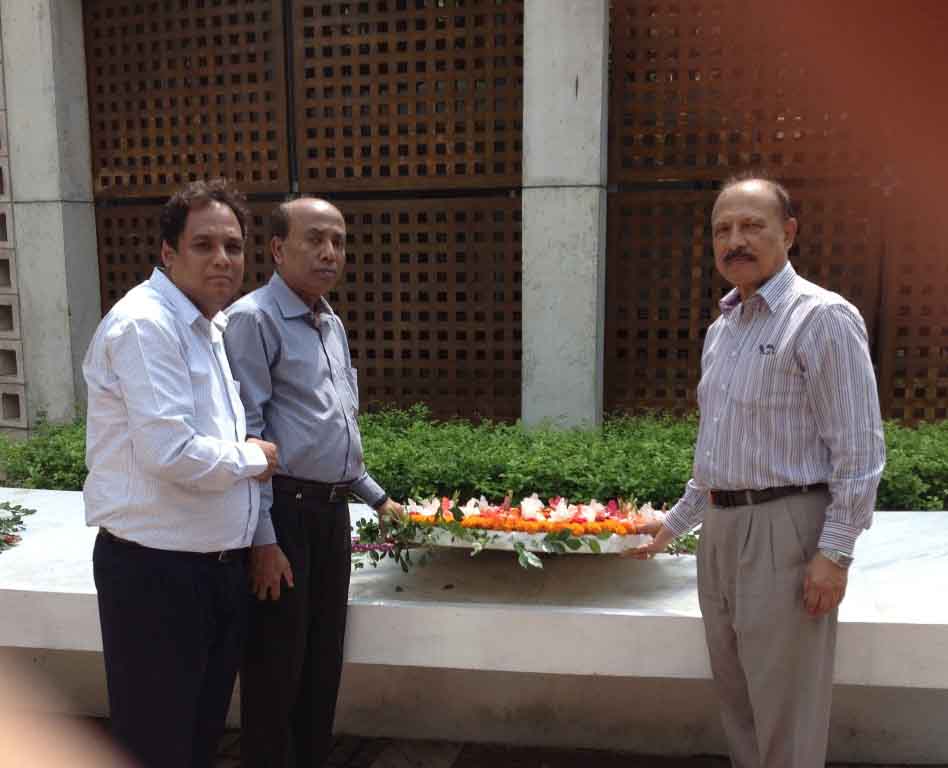
The Vice-Chancellor is paying tribute to the Father of the Nation Bangabandhu Sheikh Mujibur Rahman at his Mausoleum, Tungipara. Managing Director of CWASA Engr.AKM Fazlullah is seen present on the extreme right.
Profileof Dr. Jahangir Alam
Prof. Dr. Engr. Md. Jahangir Alam was born in 1960 in a Muslim respectable family at Chandanaish, Chittagong. His father was a freedom fighter in the liberation war in 1971. Dr. Jahangir is the father of a daughter and a son. His wife is a graduate of Applied Physics. Dr. Jahangir graduated from the then Chittagong Engineering College in 1984 and joined as lecturer in the same institution. He completed his studies in India, Macedonia and Thailand and has conducted research in many countries in the world. He has 31 years of teaching, professional and administrative experiences and has been serving 14 years at Chittagong University of Engineering & Technology (CUET) as Professor in Civil Engineering. He has more than 50 publications in national and international journals and conferences. His biographical record is included in the books of “WHOs WHO in the World-2001”, “Outstanding People in the 21st Century”, “WHOs WHO in ASIA-2006”. He is awarded divisional `Environment medal-2013′ for his glorious contribution in Environmental Research & Technology Innovation Category. UNESCO/ ACADEMIC Development Project (UADP) also awarded him for his outstanding contribution in the field of Science & Education 2013.
Dr. Jahangir is a member of Institution of Engineers Bangladesh and is also active member of more than 12 professional societies around the globe. Dr. Jahangir is the Coordinater of German Academic Exchange Services (DAAD) project “Regional Centre of Excellence for Disaster and Environmental Engineering (ReCEDEE)” and “South-East Asian Network for Disaster and Environmental Engineering Education (SEAN-DEE)”. He is also one of the Coordinator for “Capacity Building of Water Resource Management at CUET” under The Netherlands NICHE fund. Prof. Jahangir has established Earthquake Engineering Research Centre (EERC) at CUET and he is the founder life member of Bangladesh Earthquake Society. He is a renowned Earthquake specialist and Researcher. He wrote and published many books and article on Earthquake for research and to grow public awareness.
15 April, 2012 Prof. Dr. Engr. Md. Jahangir Alam appointed as Vice Chancellor of Chittagong University of Engineering & Technology (CUET).